 Back to Work
Product design / Web development
Cruizn Clean
- Role
- Designer / Developer
- Discipline
- Product design / Web development
- Stack
- Next.js, TypeScript, Tailwind CSS, FastAPI, Stripe, Cal.com, Resend
Project imagery
01 / Overview
What was this project?
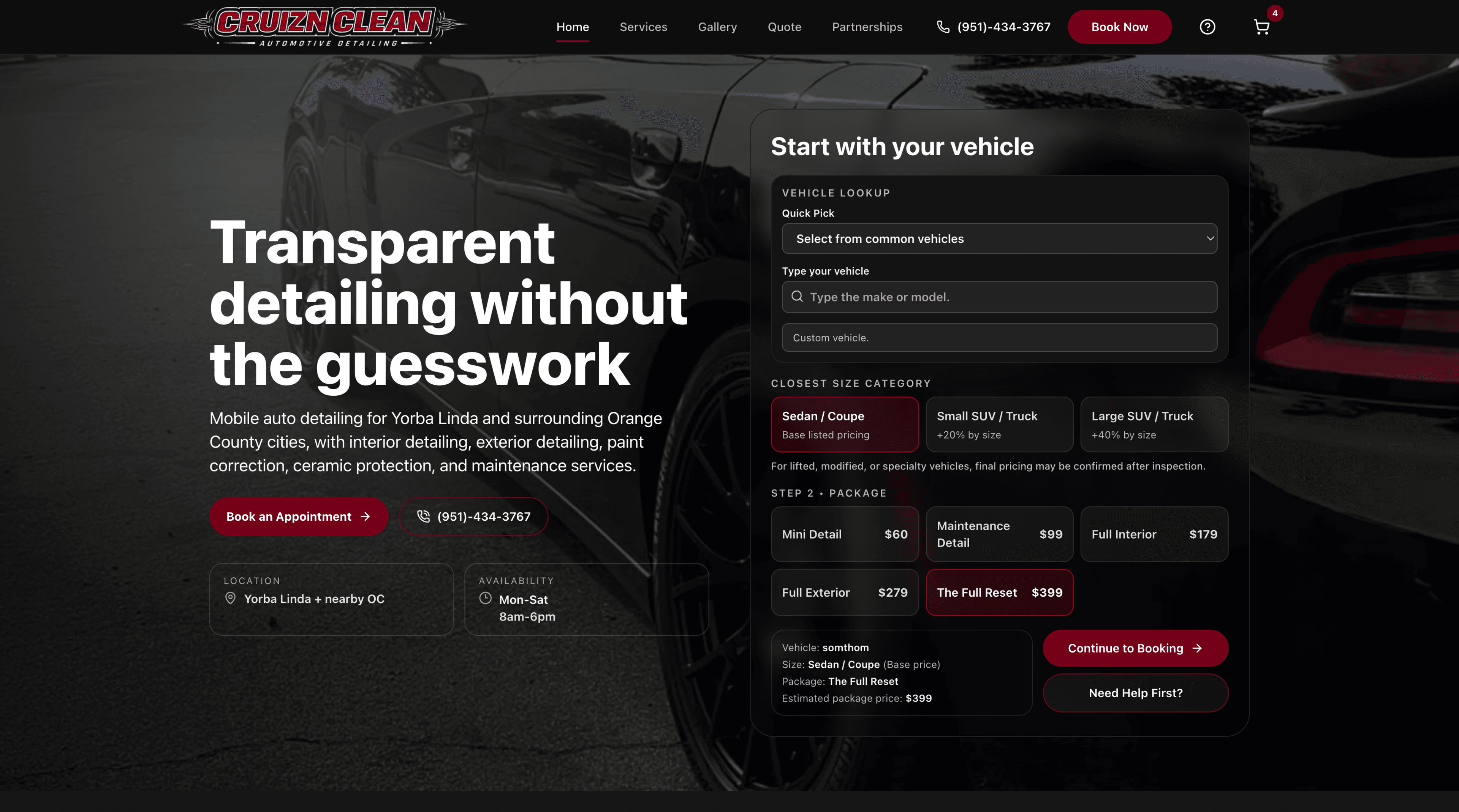
Cruizn Clean is a mobile first website and booking experience for a local mobile detailing business.
I worked directly with the owner from the first planning calls through launch, then continued into support and marketing as the relationship grew.
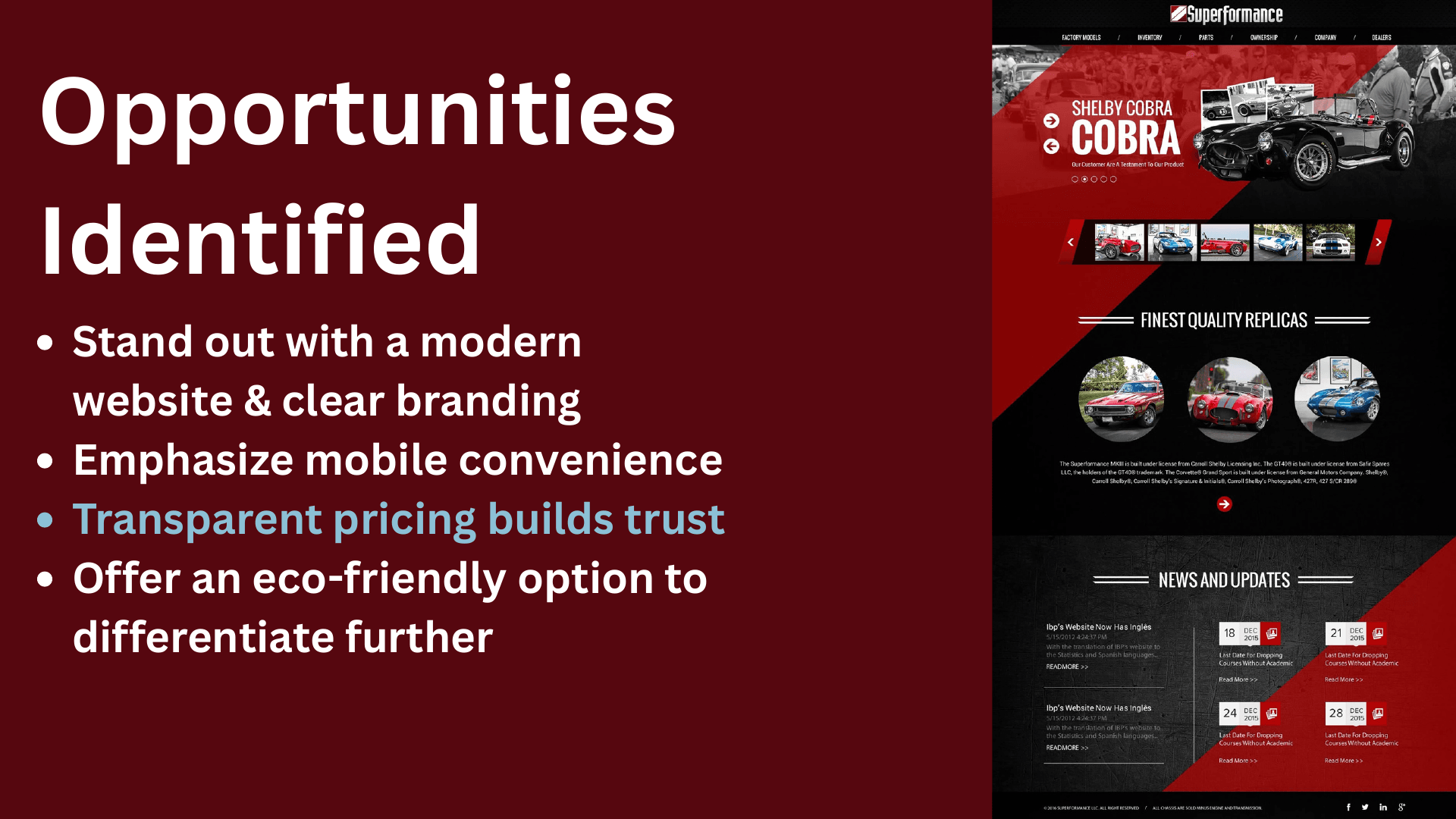
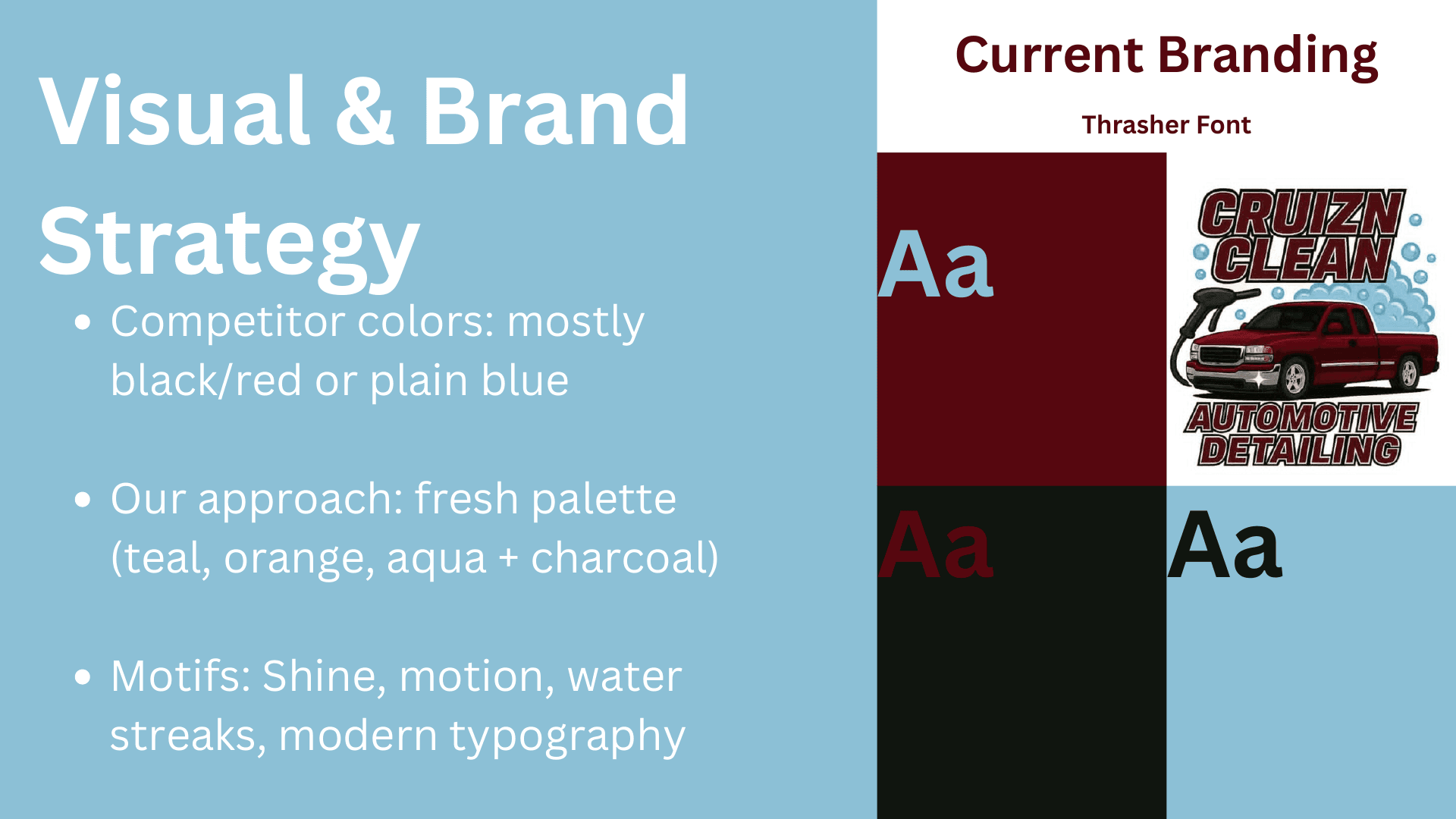
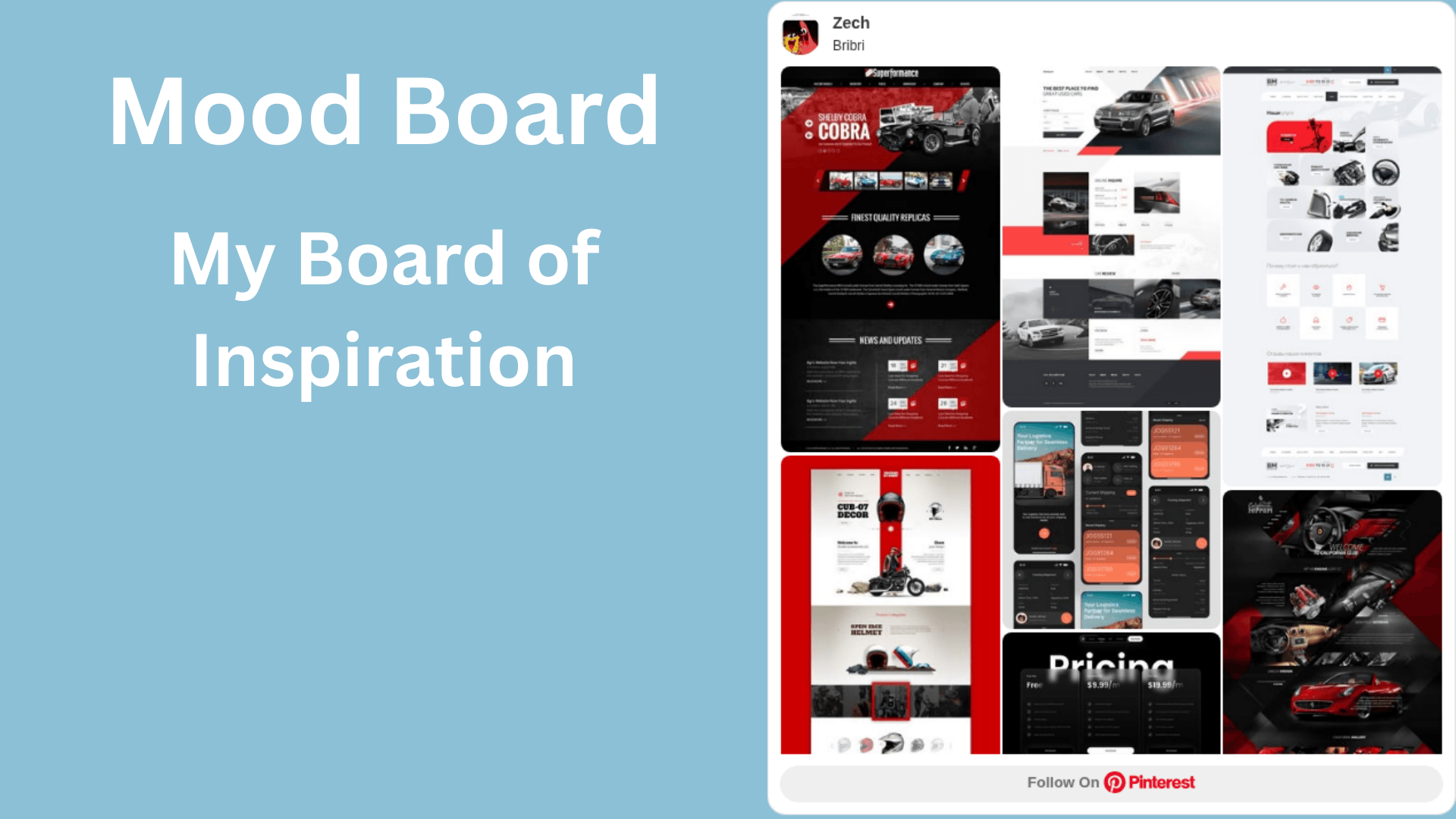
Early discovery artifact
Final product direction
02 / From discovery to direction
How did early research become a product direction?
Before the final interface existed, I used an early research deck as a discussion artifact with Brian. It was not a final specification. It was a way to make the conversation concrete.
Instead of asking whether the site should feel “modern”, we could react to real competitors, visual references, and service presentation choices. That pushed the project toward clearer positioning, mobile convenience, more understandable pricing, and a more deliberate visual identity.
The final site did not copy the deck. The deck helped us decide what direction was worth carrying into Figma and implementation.
03 / Discovery
How did the visual direction emerge?
We began with weekly consultations and competitive research.
I created a presentation comparing Cruizn Clean's existing branding with competing detailing businesses and asked my client “Brian” to identify what he liked and disliked about each website.
I used those conversations to establish the visual direction before moving into Figma mockups and implementation.
The final visual system uses a darker aesthetic common in modern automotive and detailing brands while keeping service selection and pricing easy to understand on mobile.
04 / Mobile first navigation
Why place primary navigation near the user's thumb?
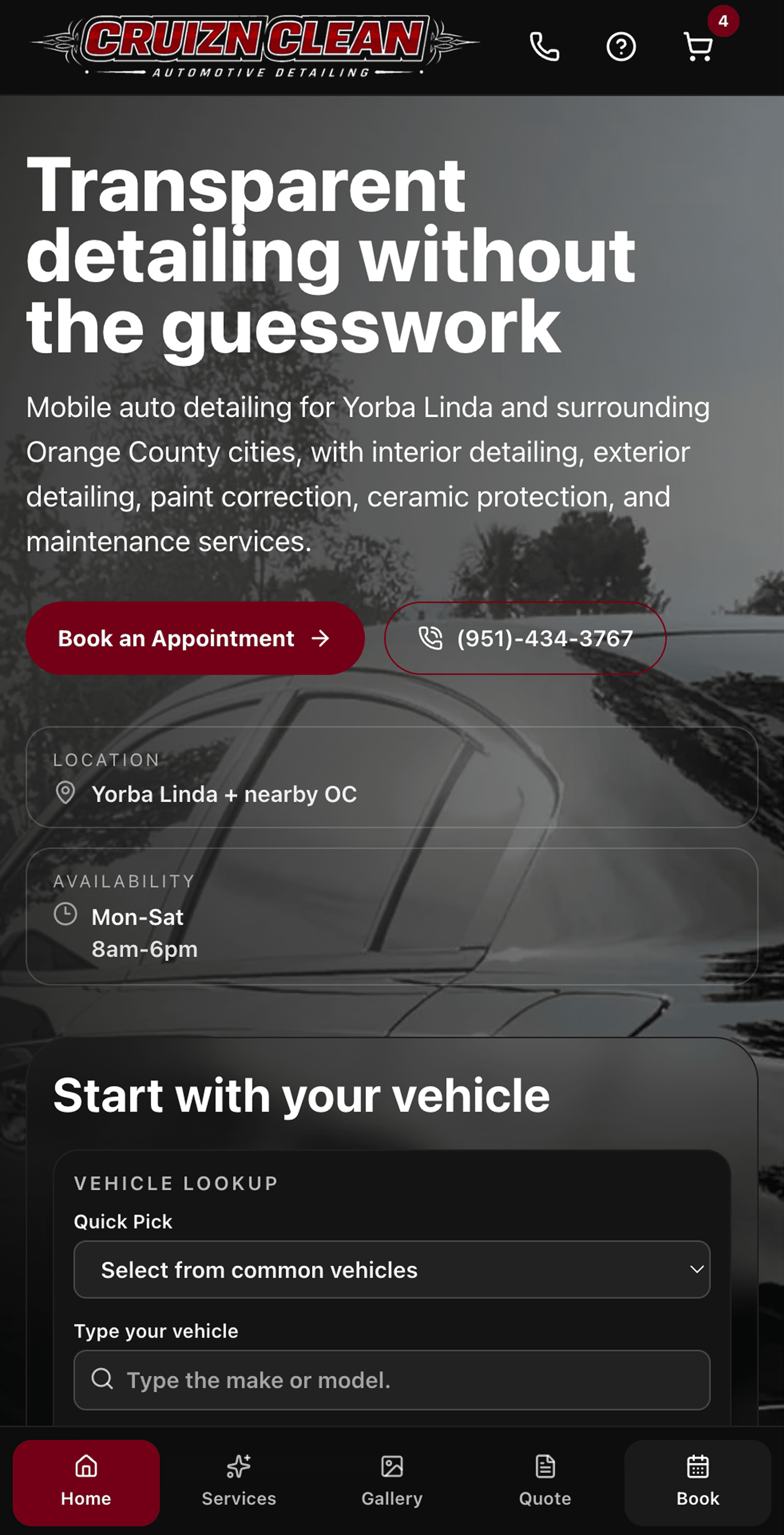
Because much of the customer journey happens on a phone, I treated mobile as the primary interface rather than a smaller version of the desktop site.
I placed the site's primary navigation at the bottom of the viewport, borrowing a familiar pattern from native applications and modern mobile browser controls. The goal was not to emulate an app purely for appearance. Bottom placement keeps the high frequency navigation closer to the user's thumb during single hand use.
The implementation also needs to respect browser chrome and device safe areas so the site's controls do not compete with operating system or browser UI.
Calling is an important customer conversion path for Cruizn Clean, so the owner's phone number is also treated as a primary CTA rather than being buried in a contact footer.
Mobile experience
05 / Booking flow
How did the flow balance accuracy and effort?
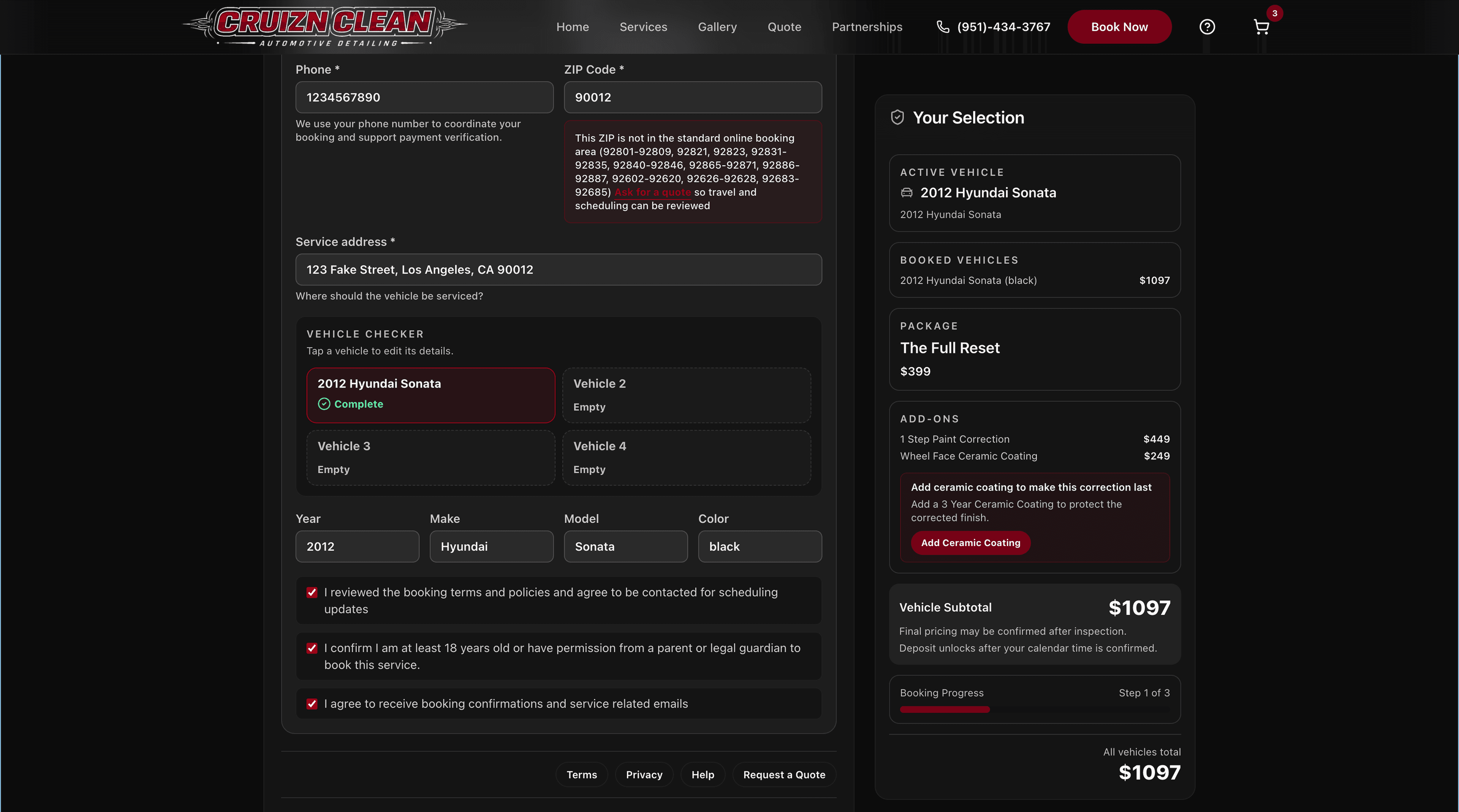
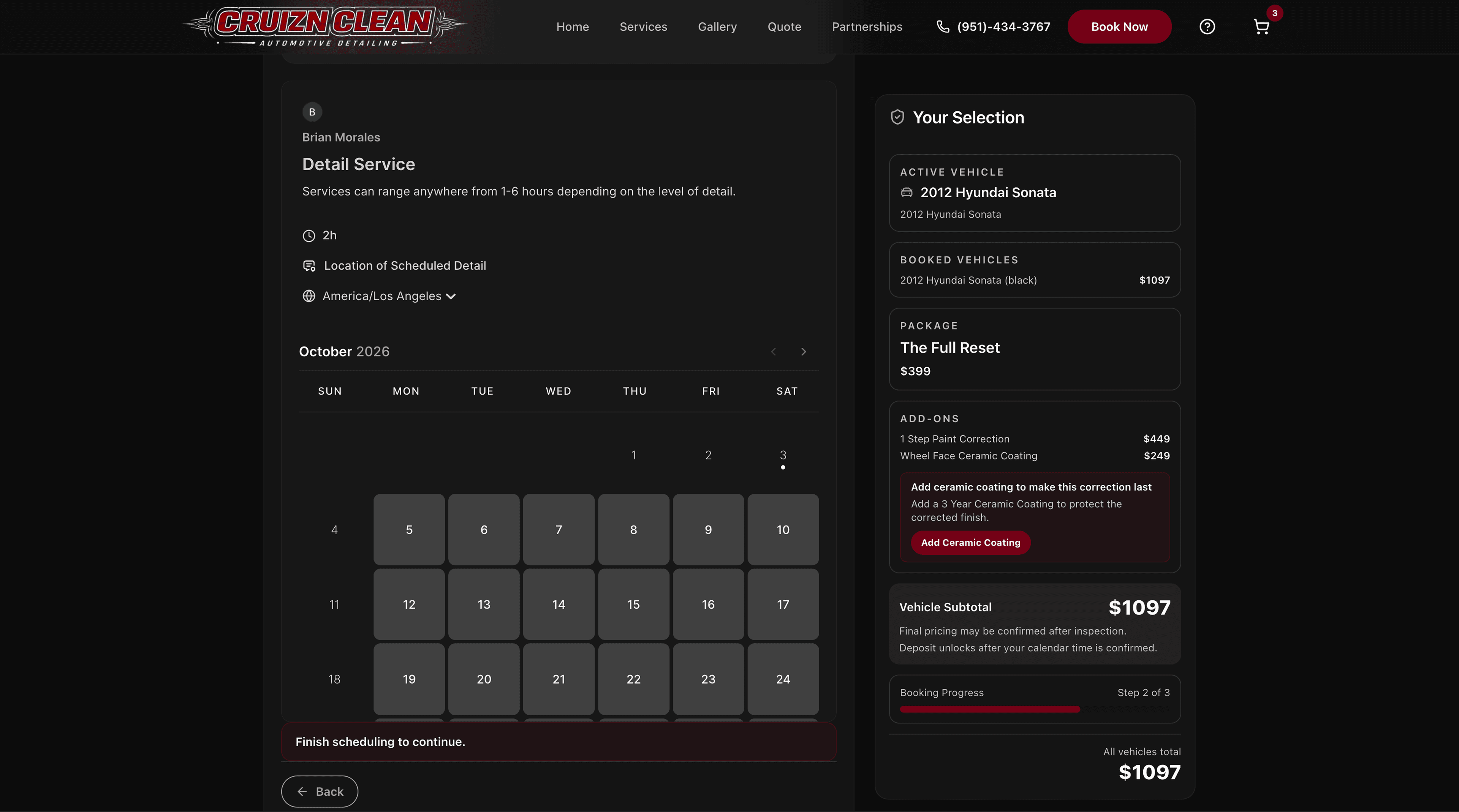
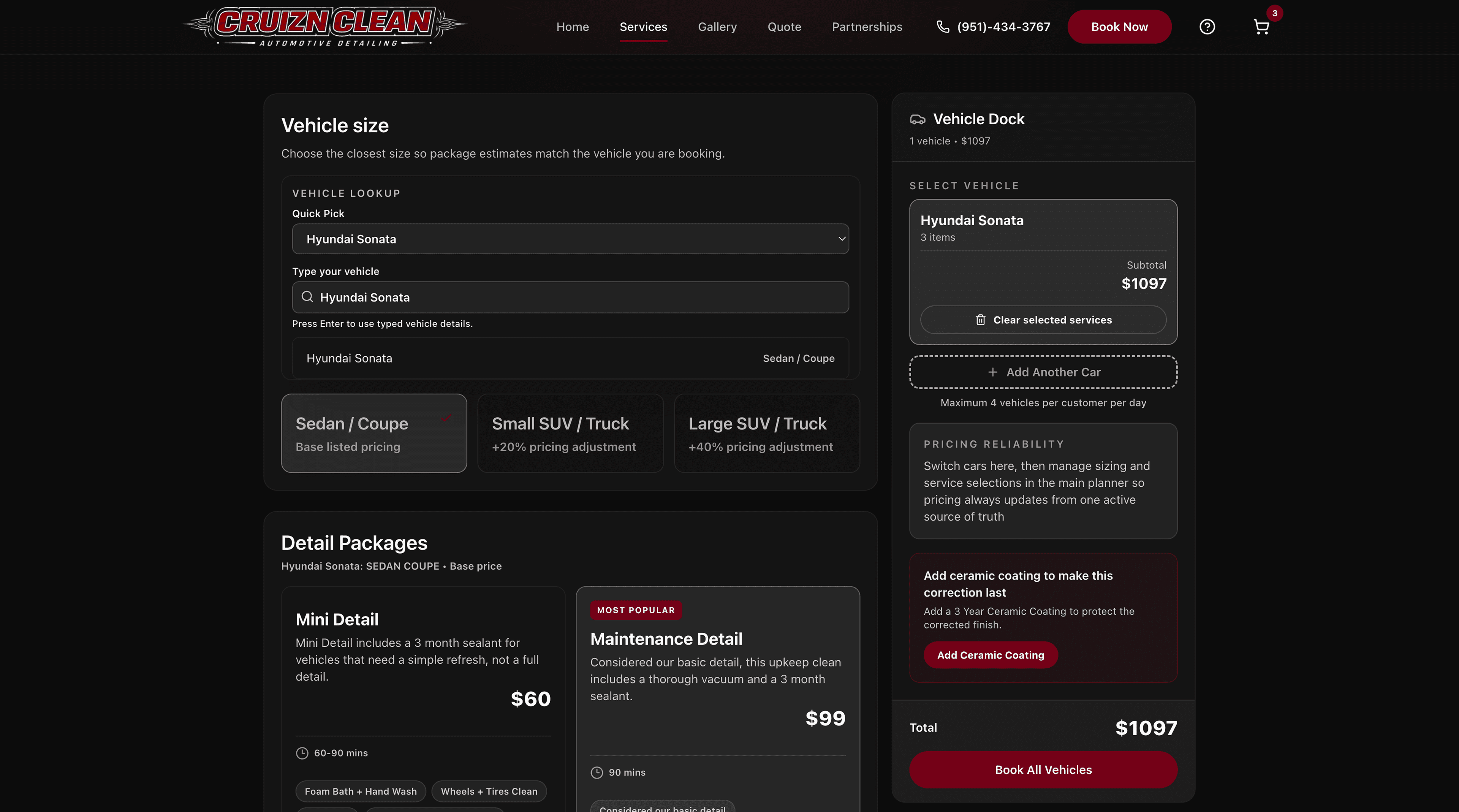
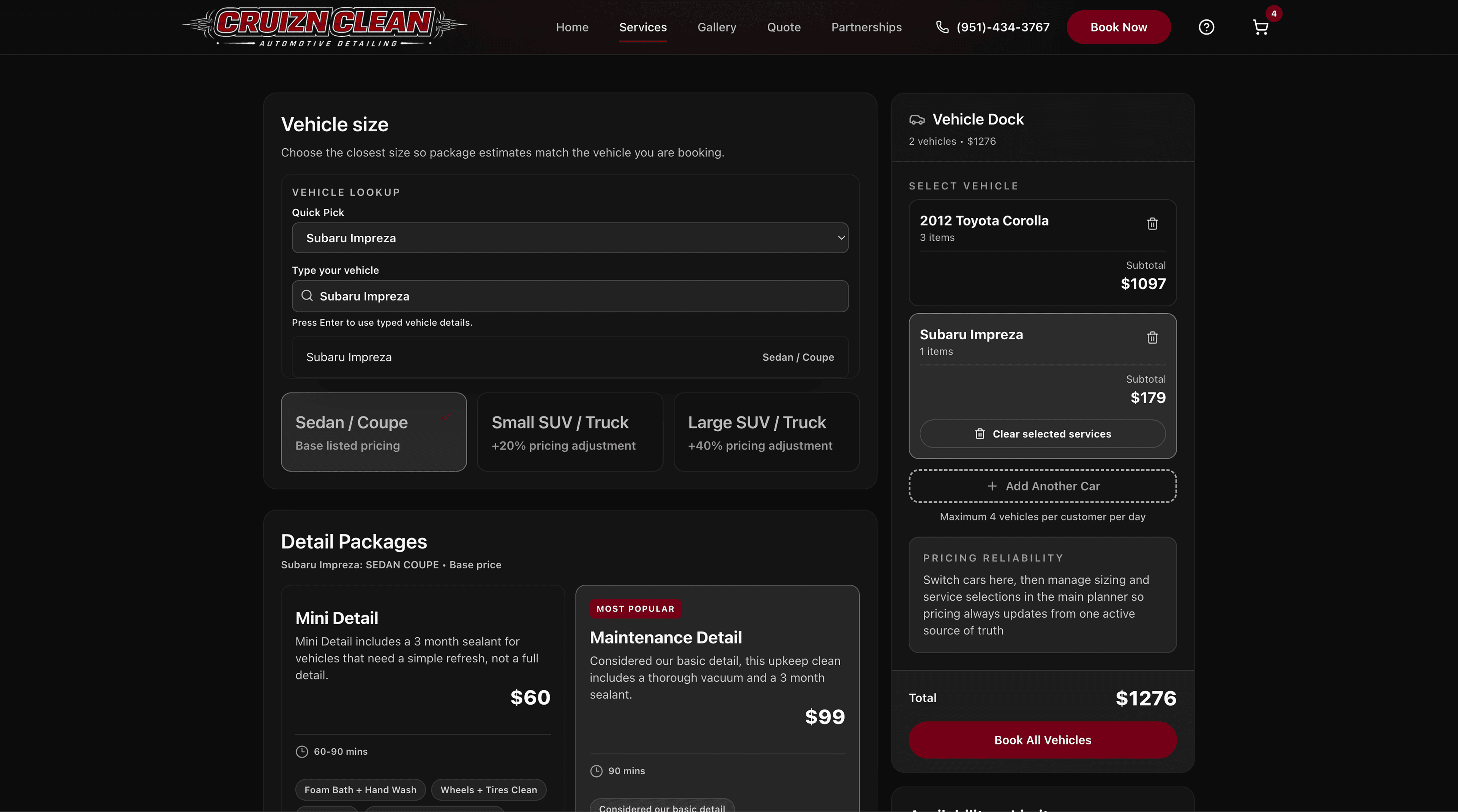
We designed the booking flow around the information needed to produce an accurate service selection without making the customer complete a long form before seeing anything useful.
Vehicle → Services → Customer Information → Schedule → Deposit → Confirmation
I also explored faster alternatives, including a homepage vehicle selector that could recommend the closest vehicle size and package before entering the full booking flow. This creates a possible later path for reducing friction without complicating the FTUX.
Booking flow evidence
06 / Service architecture
Where did specialized services reduce unnecessary infrastructure?
Because Cruizn Clean is a small local business, infrastructure cost mattered.
Rather than building scheduling, payment processing, and transactional email systems completely from scratch, I chose specialized services for each responsibility:
- Cal.com → scheduling
- Stripe → booking deposit and checkout
- Resend → transactional email
- FastAPI → backend validation and workflow coordination
- Next.js, TypeScript, and Tailwind CSS → customer facing web experience
Vehicle and service selection
07 / Payment and booking
How does the current deposit flow support commitment?
The current booking architecture carries the customer from intake into scheduling and a Stripe deposit flow.
The deposit is currently configured around a 10% booking deposit. After successful payment, the customer proceeds to the thank you page and the email or receipt flow can communicate the booking transaction.
The deposit supports appointment commitment and payment confirmation.
08 / Testing
How was the customer journey reviewed before finalizing it?
Before treating the funnel as complete, I walked through the experience first hand with Brian by simulating real customer journeys.
We reviewed the flow from vehicle and service selection through customer information, scheduling, and payment so the owner could experience the site from the customer's perspective before finalizing the interaction.
09 / Continuing relationship
What changed when delivery was not the end?
Cruizn Clean has been one of my favorite projects because I have been able to stay with it beyond launch. The work has moved from research and design into booking, payments, maintenance, and marketing as the business evolved.
Instead of ending at delivery, I continue to work with the owner as the business evolves.
Watching both the product and the company develop over time has made it one of the projects I'm most proud of.